TEXAS MORTGAGE PROGRAM GUIDANCE
Mortgage Options for the Way You Earn, Buy, and Invest
Mortgage programs evaluate income, assets, credit, property, and occupancy in different ways. I’ll help you compare traditional and alternative financing paths so you can understand which options may align with your goals and qualifying profile.
Conventional • FHA • VA • Jumbo • DSCR • Bank Statement • Specialty Programs
Your Financing Path Starts With:
01
How You Document Income
Traditional employment, self-employment, rental cash flow, assets, and other eligible income sources may be evaluated differently.
02
How You Will Use the Property
Program requirements can vary for a primary residence, second home, or investment property.
03
What You Want the Financing to Accomplish
Your purchase, refinance, investment, payment, and long-term ownership goals help shape the financing strategy.
Program availability and eligibility depend on lender guidelines, property, occupancy, credit, income, assets, and other qualifying factors.
CORE HOME LOAN PROGRAMS
Explore Common Paths to Homeownership
Conventional and government-backed mortgages have different requirements for down payment, mortgage insurance, property eligibility, occupancy, and borrower qualifications. These four programs provide a practical starting point for comparing your options.
Conventional Home Loans
Conventional mortgages are not insured or guaranteed by a government agency. Depending on the program, they may finance a primary residence, second home, or investment property.
- Fixed-rate and adjustable-rate options
- Multiple property and occupancy possibilities
- Private mortgage insurance may apply with a smaller down payment
FHA Home Loans
FHA-insured mortgages may offer a lower down-payment path and more flexible qualifying guidelines for eligible borrowers purchasing a primary residence.
- Designed for owner-occupied properties
- Mortgage insurance is required
- Loan limits and property standards apply
VA Home Loans
VA-backed mortgages are available to eligible service members, Veterans, and certain surviving spouses who meet VA and lender requirements.
- May offer financing without a down payment for eligible borrowers
- No private mortgage insurance requirement
- Certificate of Eligibility and occupancy requirements apply
USDA Home Loans
USDA-guaranteed mortgages may provide a no-down-payment option for qualifying households purchasing a primary residence in an eligible rural area.
- Property-location eligibility applies
- Household-income limits apply
- Designed for eligible owner-occupied homes
Program availability, terms, mortgage-insurance requirements, property eligibility, and borrower qualifications vary by program and lender guidelines.
ALTERNATIVE & SPECIALTY MORTGAGE OPTIONS
Financing Paths Beyond Standard
Income Documentation
Some borrowers have strong financial profiles, but their income, assets, residency status, property, or investment goals do not fit a traditional agency path. Alternative mortgage programs may use different methods to evaluate the complete scenario.
Alternative financing does not mean no qualification. Documentation, credit, assets, reserves, property, and repayment ability are still evaluated.
01 DSCR Investor Loans
Designed for eligible investment properties, DSCR programs evaluate the property’s qualifying rental cash flow as a primary part of the financing review. Property performance, credit, assets, reserves, and other program requirements still apply.
02 Bank Statement Loans
Eligible self-employed borrowers may be able to document qualifying income using personal or business bank statements over a lender-required period instead of relying solely on traditional tax-return calculations.
03 Asset-Utilization Programs
Certain programs may use eligible investment, retirement, or savings assets to calculate qualifying income under a lender-defined formula. Asset type, ownership, seasoning, and reserve requirements vary.
04 ITIN and Foreign-National Options
Separate specialty programs may be available for eligible borrowers using an ITIN or for certain foreign-national buyers. Down payment, credit references, reserves, U.S. banking, property use, and documentation requirements vary significantly.
Alternative and specialty mortgage programs are lender-specific. Availability, documentation, terms, pricing, property requirements, and borrower eligibility vary and are subject to change.
COMMON PROGRAM QUESTIONS
Questions About Choosing a Mortgage Program?
The right financing path depends on more than the program name. Your income documentation, credit, assets, property, occupancy, and goals all help determine which options may be worth reviewing.
How do I know which mortgage program may fit my situation?
A mortgage review considers how you earn and document income, your available funds and assets, credit profile, intended property use, and financing goals. More than one program may be worth comparing before selecting a path.
Do I need a 20% down payment to purchase a home?
Not necessarily. Some conventional and government-backed programs may permit eligible borrowers to purchase with a smaller down payment, while certain programs may offer a no-down-payment option. Requirements depend on the program, property, occupancy, and qualifying profile.
Can self-employed borrowers qualify for a mortgage?
Yes, eligible self-employed borrowers may qualify using traditional tax-return documentation or, under certain alternative programs, bank statements, assets, or other approved documentation. The required business history and calculation method vary by program and lender.
Does Non-QM mean no documentation or no qualification?
No. Non-QM and alternative mortgage programs still require underwriting and documentation. Credit, income or cash flow, assets, reserves, property, and repayment ability may all be evaluated using program-specific guidelines.
Can rental income help me qualify for an investment-property loan?
Rental income may be considered depending on the property and program. Documentation could include leases, tax returns, appraisal rent schedules, or the property’s qualifying rental cash flow under an eligible DSCR program.
Are ITIN and foreign-national mortgage programs the same?
No. They are separate specialty-program categories with different identification, residency, credit-reference, income, asset, reserve, down-payment, banking, and property-use requirements. Available options vary significantly by lender.
This information is for general educational purposes. Mortgage-program availability, documentation, terms, and eligibility vary by lender and qualifying scenario.
YOUR FINANCING STARTING POINT
Compare Mortgage Options With the Full Picture
The next step is not choosing a program from a list. It is reviewing your income, assets, credit, property, available funds, and goals to identify the financing paths that may be worth considering.
No pressure - just clear guidance about documentation, tradeoffs, and appropriate next steps.
CONTACT INFORMATION
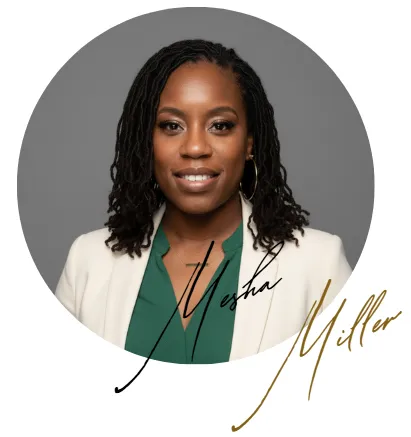
Mesha Miller
NMLS #2258067
The Mortgage Mentor
(866) 764-5509
[email protected]
Explore
Support


© Copyright 2026. Mesha Miller.
Licensed to Do Business | NMLS #2258067
This is not an offer to enter into an agreement. Not all customers will qualify. Information, rates and programs are subject to change without notice. All products are subject to credit and property approval. Other restrictions and limitations may apply. Copyright © 2026 | Envision Home Lending LLC
Company NMLS ID: 2619789
8330 Lyndon B Johnson Fwy Suite 360 Dallas, TX 75243 United States